- Project
- Extension and renovation
- Location
- Stanmore
- Architect
- Sam Crawford Architects
Our Challenge
Renovate the original heritage home and replace an aging extension with complex existing site conditions.


Our Solution
Stanmore House
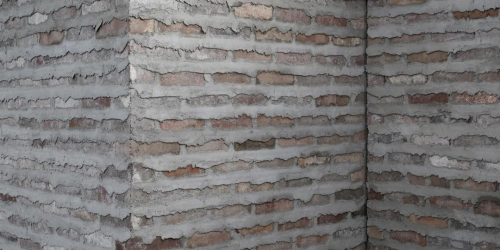
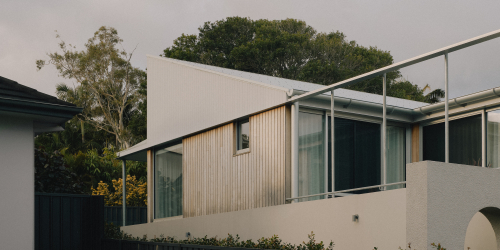
Stanmore House is a generous sized family home, located on a large block in the Inner West of Sydney. Situated on a parcel of land effected by overland flooding, a flight path above and a subterranean creek below, Build By Design knew from the outset that this project would have some challenges. The task was to restore and upgrade an existing heritage front and extend off the back with a complex, nuanced and contemporary build. Stanmore house could be described as a civic facing dwelling. It is adjoined at the front and rear of the building with a road on one side and a lane on the other. The recycled brick lane way wall forms a sculptural boundary and serves as a public point of interest for those who pass by. The home in this way reinforces its urban context and includes a mural by a local street artist. Inside the home the aim was to provide a calm and quite environment for the family to age in place. The project pushes engineering and construction techniques with the use of a unique floating ceilings and sculptural brickwork.
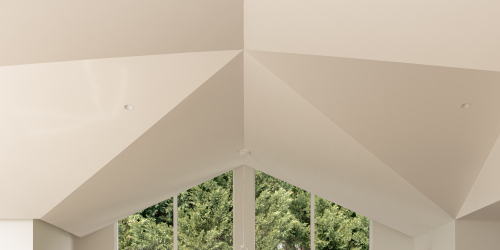
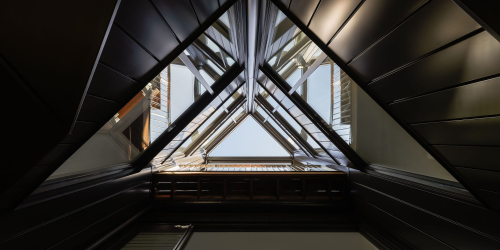
Stanmore house has a number of key features that set it apart from other projects. The main body of the house is formed overhead with a large butterfly roof. Internally this forms a curved reverse butterfly ceiling to the main living space. The engineering and design gives the overall impression that the ceiling is floating over the large span. Externally the roof protrudes creating an expressive form which can be seen from the rear lane. There was considerable energy and collaboration put into understanding the complicated diaphragm design of the roof. It was formed by large stitched and blocked LVL beams which were then sandwiched top and bottom with structural plywood. The concept was that the entire roof became a single homogeneous structural element. This meant that the roof was not technically self supporting until the plywood and bracing below had been applied. During construction, the roof members were temporarily supported underneath until all elements were complete. After props were removed, insulative, service and secondary framing layers were then hung off or attached to the structural member to complete the finished intent.
Another feature of the living room is the back to back steel angle columns which form a unique cross shape design. These columns – apart from having a unique look and feel - sail through to frame clerestory level windows and form the window frames along with fabricated steel hoods and blades.
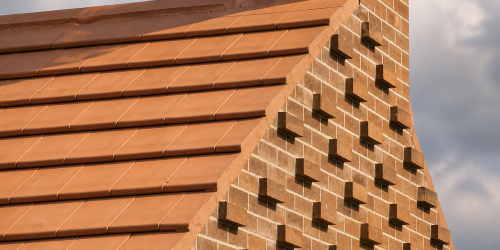
A recycled brick wall forms an eye catching sculptural component to the rear lane. The wall also acts as a screen to the public facing windows and discourages graffiti. The wall offers textured depth to the lane which compliments its urban setting. The unique artistic brick pattern pushes the limits of what is possible with the masonry form.
Tucked away in the existing portion of the home, is a secret ensuite concealed within a joinery wardrobe door. The colourful moody ensuite features various interesting curves, skylights and detailed metalwork touches.
The second living room features a large top hung, face sliding glazed door. The door allows light to fill the room and spill into the adjoining hallway and stairwell. The 350kg door was top hung off a custom concealed structural angle which was tied back into the home.
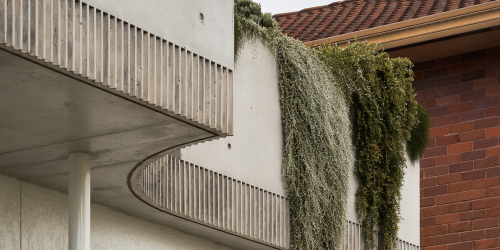
The backyard features a number of exposed concrete elements. The pool coping and deck were carefully screeded and lightly polished and sealed. It also contained a cast in pool balustrade and detailed overhang and rebate for the Remco concealed in pool cover. The exposed concrete in the pool area is complimented by the verandah, path and various exposed concrete stairs which fill out the other areas of the yard.
A unique feature of the build was the requirement for various forms of acoustic treatment. Initially an acoustic engineer documented the requirements of the project. As the project pushed forward, the client asked if there was more we could include, specialist suppliers and contractors were engaged to meet and exceed the requirements. This included a flexible mass-loaded vinyl noise barrier applied to the required ceilings and walls. The barrier was sealed and taped over joints and leakage points. In addition, high density acoustic insulation was applied inside aluminium windows and other critical areas. The butterfly ceiling was clad and sealed with PIR insulation board and the existing home timber floor frames were retrofitted with rigid foil board and underfloor bulk insulation.
A feature of this project was researching and being conscious of using more environmentally friendly materials and practices. All concrete used on the project was certified low carbon concrete mix. We also ensured that we were sourcing products like plasterboard from suppliers who use a portion of recycled material in their manufacturing. All timber on the project was sustainably sourced.
The existence of a subterranean creek made getting out of the ground very difficult. Early collaboration with structural engineers, geotechnical engineers, client and architect was needed. Because of the presence of flowing ground water about 800mm under the surface Continuous Flight Auga [CFA] piles were needed for the house foundation. This ensured piles could be drilled and poured simultaneously, preventing the ground water from spoiling the concrete. A contiguous pile wall using the CFA method was required for pool excavation. This was to eliminate the issue of excavation filling up with water. It was suggested that hydrostatic grout plugging may be required to plug the gaps between the piles however, because we used skilled and experienced contractors, the contiguous piles were well executed and no plugging was required. During excavation and drilling, constant geotechnical input and advise was required, and an engineer was on site for much of the process. Due to the high cost of Continuous Flight Auga piles, Build By Design were instrumental in coordinating a re-design of the slab on ground. With thicker beams and more steel reinforcement added, we were able to eliminate a number of piles from the design – saving time and money. The use of a tight access CFA rig meant we could drill piles close to the boundaries and in particular close to the existing building and associated assets.
One of the architectural and building challenges was to adhere to the flood level conditions. This required an overland flow ‘tunnel’ under the house, specialised perforated mesh to the bottom of the garage doors and various structural upstands and hobs. We were required – as much as possible – to hide or disguise the flood mitigation requirements. This included packing out walls and over sheeting, using class 2 off-form concrete as an expressive element and screening with metalwork or planting.
One architectural element that created a significant challenge was the curved living room windows. Because of their site context, they were a critical meeting point where many materials and elements came together. These double glazed curved windows were situated on top of corresponding curved off form concrete. The custom rolled aluminium frame head and sill were sunken and the stiles hidden within the cross columns leaving only daylight glass. In addition, there was also a corresponding curved motorised curtain track internally and a bespoke fabricated curved structural steel awning and facia detail with an LED strip light externally. Each of these curved elements had different yet related radiuses.